
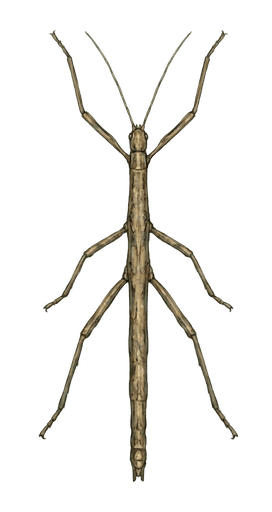
Common WalkingstickDiapheromera femorata
About this species
- Length
- 3.5 in
- Wingspan
- 3 in
From our Collectors' field notes
Diet
As strict herbavor herbivores, they spend their nights eating oak and hazelnut leaves. They remain perfectly motionless during the day, feeding entirely under the safety of darkness.
Defense
Masters of camouflage, walkingsticks are practically indistinguishable from a twig. When resting, they extend their front legs forward to break up their outline and will even sway rhythmically to mimic a branch caught in the breeze.
Regenerative Limbs
If a predator grabs hold of a leg, the walkingstick utilizes a drastic escape plan: it detaches the trapped limb to drop away safely. Young nymphs can remarkably regenerate the lost leg over their next few molts.
The Seed Eggs
Mothers drop their eggs one by one from the treetops. They fall to the forest floor looking exactly like tiny plant seeds in the leaf litter, where they remain hidden and safely overwinter.
Field Marks
Males are small, incredibly slender, and typically brown. Females are noticeably larger, much thicker, and often a pale green or gray.