
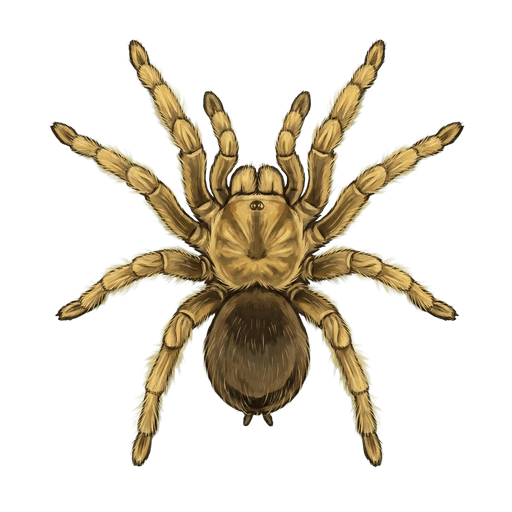
Desert Blonde TarantulaAphonopelma chalcodes
About this species
- Length
- 5 in
- Wingspan
- 4.8 in
From our Collectors' field notes
Hunting
Instead of spinning webs to trap prey, these tarantulas use a radial web as a tripwire, alerting them to passing beetles, crickets, and even small mice and lizards. They pounce on their prey and pull it directly into their burrows.
Defense
Its carapace and upper legs are covered in sandy-blonde brisels bristles that help it blend into its arid habitat. When threatened, the tarantula uses its back legs to kick up a cloud of these bristles to create an itchy distraction.
The SIlk Burrow
To escape the desert heat, these ground-dwellers spend the day tucked away inside deep, cool burrows. They line the dirt walls with a layer of white silk to keep their homes clean and prevent the sandy roof from caving in.
The Monsoon Migration
Heavy summer rains cause mature males to abandon their subterranean burrows. They wander endlessly across the desert in a high-risk search for mates.
Field Marks
These spiders are easily identified by their two-toned coats. Their black or brown legs and abdomens are perfectly contrasted by a pale, golden-blonde patch of fuzz on the top of their heads.