
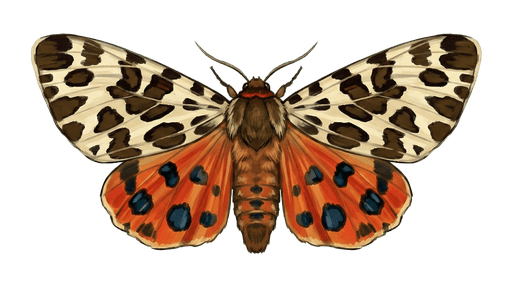
Garden Tiger MothArctia caja
About this species
- Length
- 1 in
- Wingspan
- 2.3 in
From our Collectors' field notes
Diet
The caterpillars eat as much as possible, even seeking out poisonous host plants like foxglove and ragwort, the toxins of which make them distasteful to birds. Adults don't have a mouth, so they rely on the energy stored from their larval days.
Defense
When threatened, the moth will lift its brown front wings to flash bright-red hindwings designed to terrify predators. If that fails, it drops to the dirt, plays dead, and secretes a foul-tasting fluid as a final deterrent.
Bat Jammer
These moths can actually hear the sonar squeaks of hunting bats. To stay safe, they have an organ (called a tymbal) that produces rapid clicking sounds that jam the bat's sonar.
The Woolly Bear
Garden tiger moth caterpillars are called woolly bears. Their "fur" provides the insulation needed to survive the cold weather, allowing them to hibernate through the winter.
Field Marks
These moths have rich, chocolate-brown front wings painted with winding, creamy-white patterns, and a thick, fuzzy collar around their heads.