
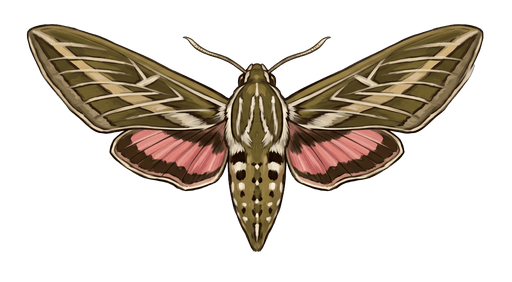
White-Lined Sphinx MothHyles lineata
About this species
- Length
- 1.8 in
- Wingspan
- 3 in
From our Collectors' field notes
Diet
As caterpillars, these little eating machines aren't picky and will munch on a huge variety of plants. As adults, they use their long proboscis to sip nectar while hovering over deep-throated flowers like honeysuckle and columbine.
Defense
The caterpillar has a prominent yellow or orange horn on its tail. If bothered, it might thrash around to look like it's about to sting, but this horn is completely harmless.
Marching Armies
When food becomes scarce, the caterpillars are known to form massive, marching armies. They swarm together, traveling across the landscape in huge numbers in search of fresh host plants.
Cocoon
When ready to pupate, the caterpillars burrow several inches underground to transform inside a hard, glossy brown shell.
Field Marks
Their body shapes and rapid wingbeats cause them to be mistaken for small hummingbirds. The easiest way to differentiate them is to look for the white stripes that cross their front wings.