
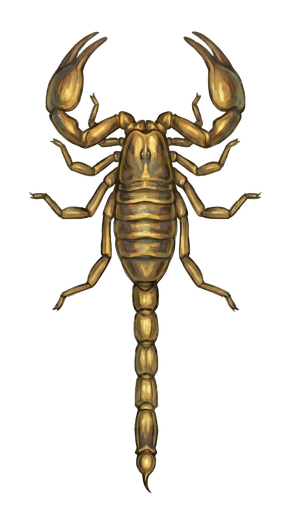
Arizona Bark ScorpionCentruroides sculpturatus
About this species
- Length
- 2.8 in
- Wingspan
- 1.8 in
From our Collectors' field notes
Diet
These scorpions are nocturnal hunters, using their sensitive pincers to snatch up their pray prey. They are agile climbers and ambush their prey by waiting completely motionless on tree bark or rock faces.
Shelter
To escape the blistering daytime heat, they tuck themselves away snugly under loose tree bark or inside cool, dark rock crevices. In the winter, they forgo their solitary lifestyles and pack themselves together to stay warm.
Defense
They are the most venomous scorpion in North America. Their sting delivers a potent neurotoxin that causes intense pain, numbness, and muscle twitching.
Maternal Care
Instead of laying eggs, females give birth to live young. To protect them from predators, the mother acts as a living shield, carrying a squirming mass of 20 to 30 pale scorplings on her back until their first molt.
Field Marks
When a UV backlight is shined on them in the dark, specialized proteins in their exoskeleton cause them to glow a neon cyan-green.