
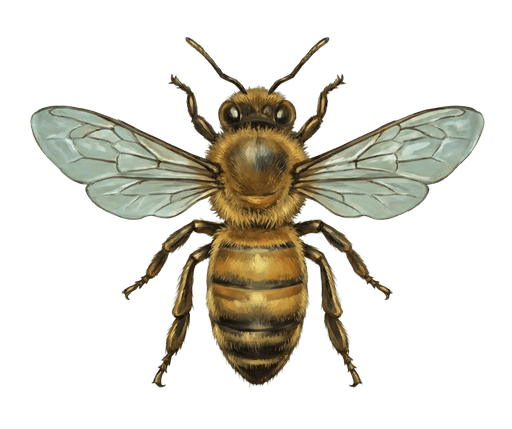
Honey BeeApis mellifera
About this species
- Length
- 0.5 in
- Wingspan
- 0.9 in
From our Collectors' field notes
Diet
These foragers spend all day gathering nectar and yellow pollen from wildflowers. They store the nectar in a second stomach, regurgitating it at the hive to create honey. The pollen is fermented and used to feed the young.
Defense
Workers have a barbed stinger that anchors into flesh but is also fatal to the bee. The stinger releases an alarm pheram pheromone to rally the other hive members. The pheromone smells like bananas!
The Waggle Dance
Scouts communicate the distance and direction of flowers by performing a figure-eight waggle dance. Using the sun as a compass, they create a precise map that directs the colony to fresh nectar patches.
The Nursery
Nurse bees tend to the larvae tucked into hexagonal wax cells until they are ready to pupate. While most larvae receive standard rations of bee bread, queen bee larvae receive an exclusive diet of nutrient-dense royal jelly.
Field Marks
Queens boast a distinctly elongated abdomen. Drones (males) lack stingers entirely but have massive, wrap-around eyes for spotting queens in flight. Workers feature thick hairs on their hind legs that form 'pollen baskets'.